
The Case for Beavers

Updated: Jan 19
‘Nestled in the serene environs of Paradise Fields in Greenford, Ealing, the Ealing Beaver Project is a groundbreaking initiative aimed at fostering urban human-beaver coexistence. As London’s first fully accessible urban beaver reintroduction site, we are dedicated to bringing people closer to nature right in the heart of the city,’1 (The Ealing Beaver Project).

Beavers have been in existence for over 30 million years, living across Europe, northern Asia, and semi-arid areas in the Mediterranean and Middle East. By the sixteenth century, however, the Eurasian Beaver had been persecuted and hunted into near extinction. This was mainly for their fur, meat, and scent glands which produced castoreum – a substance used for vanilla flavouring, perfumes, soaps, and traditional medicines at the time. Since the 1920’s, European countries began reintroducing beavers and have been reaping the rewards of this rewilding effort ever since. In 2009, Scotland began to launch reintroduction trials with confirmation in 2015 that beavers are here to stay. By 2019, Scotland’s beavers were added to the European Protected Species List with England’s beavers also given this protected status and legal protection later in 2022. Beavers are gradually making a comeback as one of nature’s keystone species.
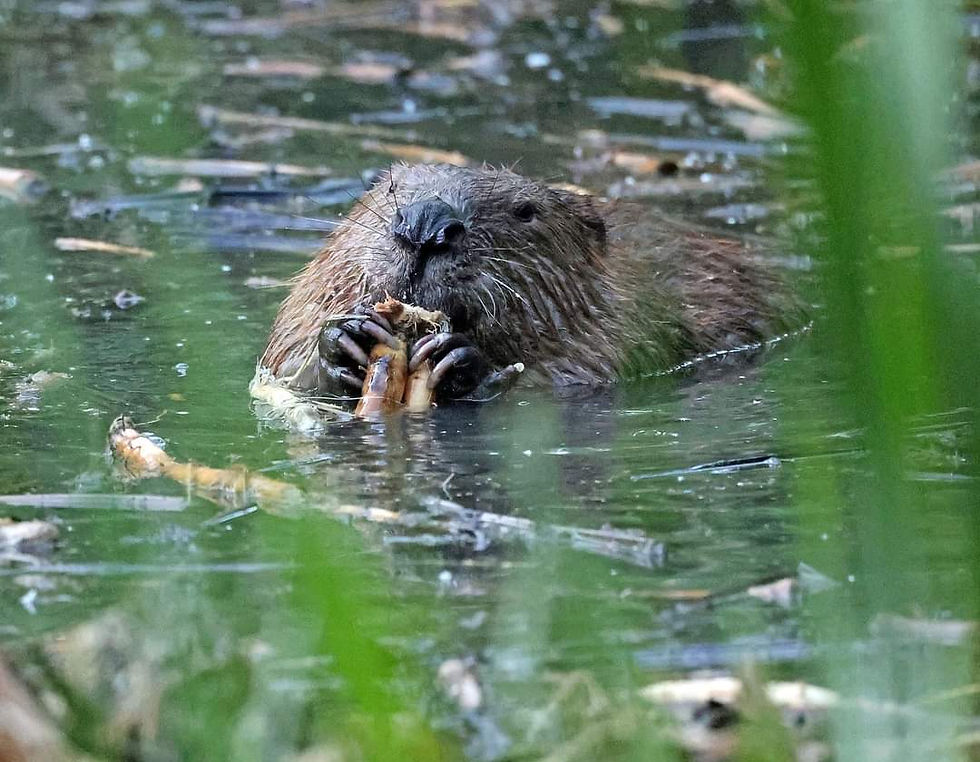
With fewer than 2000 beavers in Britain alone, the reintroduction has been slow in comparison to Europe and Scotland. Earlier this year in February, the government announced2 its commitment to reintroducing beavers into the wild, beyond enclosures, with licenses administered through Natural England. The Ealing Beaver Project is the first accessible site of its kind in the UK. There is hope that there will be more to come. Since the release of a family of five in Paradise Fields, the beavers have transformed the area from an ecological dead zone into a rich and biodiverse habitat. Many who joined us that day for the site tour had lived in the area for many years. This was their first time exploring the greenspace in its entirety.

We had a chance to observe some of the dams and resting structures that the beavers had built out of wood, branches, leaves, mud, and stone, all carefully woven and packed together. As beavers chew through older trees at the base – a practice known as coppicing – this creates more open areas for sunlight and encourages new tree growth. Dams create shallow and deeper pools which slow, store, and filter water. This reduces the risk of flooding downstream particularly during periods of heavy rainfall, improves drought resilience, protects against wildfire, and enhances water quality by filtering out sediment and pollutants. The engineering of dams, ponds, and lodges help create and maintain essential wetland habitats – a vital carbon sink, home to countless freshwater plants and animals, that have been in rapid decline. Over the last 400 years, 90% of freshwater wetlands3 have been lost in England. We need beavers now more than ever.

‘Beavers are sometimes called a biodiversity magic pill; where beavers are re-introduced, often enormous biodiversity benefits follow,’ (The Ealing Beaver Project)4.
Although no beavers were spotted that morning, signs of their care and industrious activity were everywhere to be found. There were trees, completely felled and some a work in progress, with bark chipped away as high as the beavers could get (they’re not known for their climbing abilities). The result is valuable dead wood left behind for fungi, invertebrates, and eventually other animals higher up the food chain to consume and thrive on. Beyond beavers, we listened and looked out for birds, including herons, robins, parakeets, and greater spotted woodpeckers.

Not a single river in England is considered to be in good health5. This is largely due to urban and industrial pollution, agricultural run-off, including animal waste and fertiliser, and pollution from water companies pouring raw sewage into waterways. In 2024, the number of serious water-polluting incidents had gone up by 60%6 with Thames Water, Southern Water, and Yorkshire Water accounting for most of these incidents. In the same year, the release of raw sewage by water companies hit a record7 3.6 million hours. Beavers are not a substitute for the regulation, accountability, and enforcement needed to restore our rivers, but they make a powerful case for investing in natural solutions and resources wherever possible.
A big thank you to Şeniz Mustafa, Urban Beaver Officer at the Ealing Beaver Project, for facilitating this walk with so much depth and enthusiasm. We learnt so much about embracing nature in urban spaces. To book a site visit or get more involved in the project as a volunteer, you can find out more here8.

If you have any climate related topics you would like to learn more about or activities like this site tour, tailored to your needs and interests, please let us know here! You can also get in touch with our Environmental Strategy Officer directly at Jennifer@voice4change-england.co.uk.
This event is part of our Where Climate Meets Race project, a three-year programme supported by the Esmée Fairbairn Foundation looking to catalyse deeper and more inclusive community engagement on climate. You can learn more about our climate justice work here: voice4change-england.org/climate-justice


Comments